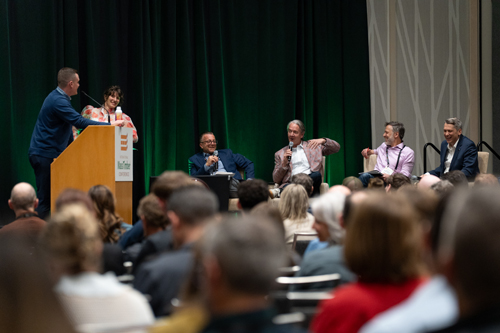
 The Boardroom
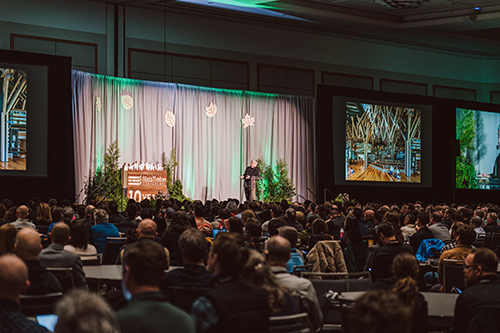 Keynote Presentations
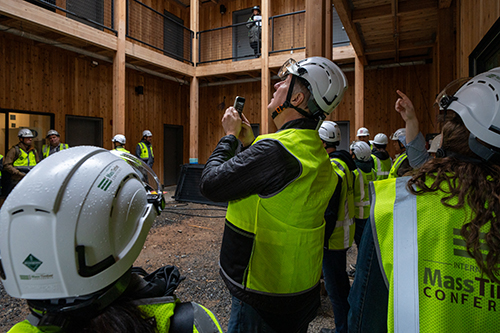 Building Tours
 Workshops
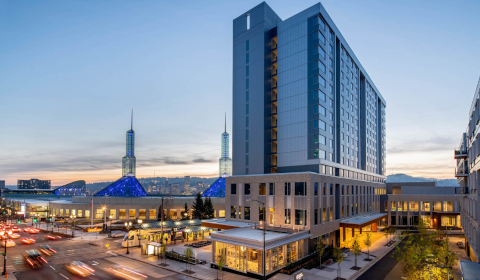 Book Your Hotel »
 Negotiated Airfare
 Reserve Your Booth »
 Sponsorship Download »

Wednesday, April 1, 2026
Achieving Cost Clarity for Mass Timber Projects
Oregon Ballroom 203Moderator:

Five Proven Steps To Developing and Communicating Accurate Cost Estimates and the Value of Mass Timber
Cost uncertainty remains one of the biggest barriers to broader adoption of mass timber. In this session, XL Construction’s Co-Founder Dave Beck will provide proven steps to developing and communicating cost estimates early in the development process. He will share which partners are essential to engage at schematic design, how to delegate scopes of work through the complexities of procurement, and how to understand the impact material type can have on your bottom line. Leveraging knowledge gained through self-performing installation, he will describe the savings that can come from choosing the right beams, connectors, and hardware. Dave will shine a light on how and when promising projects too often fall flat when costs get inflated to overcompensate for the risk of the unknown associated with mass timber. Clients know there’s no equivalent option for the promise of sustainability that mass timber offers. Dave has cracked the code on how to lead design-build teams to design for cost effectiveness, plan for efficient construction, and deliver healthy and desired spaces with a strong return on investment.

Budget-Driven Design: Winning With Early Timber Estimating
This presentation outlines a strategic approach to developing accurate and early cost estimates for mass timber projects during the design-assist phase. By engaging suppliers early and leveraging historical data, installer experience, and bid tools, teams can guide design decisions and ensure budget alignment from the outset. It emphasizes designing for cost effectiveness through value engineering, educated in both design and construction best practices, and prefabrication, which reduces labor and accelerates installation. The financial benefits of mass timber include faster construction timelines, reduced embodied carbon supporting sustainability goals, and reduced indirect costs such as site disruption and ease via use of a prefabricated system. Together, these practices unlock significant economic, environmental, and operational value for project stakeholders.

Integrating Manufacturing and Design: A Framework for Cost-Efficient Mass Timber Projects
Increased adoption of mass timber as a structural and architectural solution remains limited by ongoing uncertainty in both life-cycle and upfront cost comparisons to conventional systems. In mass timber design, not all cubic feet are created equal: glulam may make up just a quarter of the volume but can drive over half the cost—sometimes twice that of CLT.
This presentation introduces a structured methodology for achieving early cost clarity through an integrated design approach that unites client, architect, engineer, and mass timber manufacturer from the schematic design phase, even prior to formal design contracts. This collaboration enables early decisions on module, material, and grid selection (e.g., 3-ply versus 5-ply systems; 12-foot versus 20-foot grids) based on actual manufacturing and engineering constraints unique to mass timber.
Drawing on data from completed projects, the session will present verified outcomes including construction schedule reductions of 10–20%, material savings of up to 40%, and additional efficiencies in specialty conditions.
Attendees will gain…
(1) a reproducible framework for achieving cost convergence in early design,
(2) actionable strategies for forming integrated teams while maintaining competitive bids, and
(3) empirically derived design aids for optimizing structural layouts and assisting with early design decisions.

Joshua Schulz
Siegel Structural Engineering
Session CEUs
Course Description
Cost uncertainty remains a significant barrier to broader adoption of mass timber systems. This session examines proven strategies for developing accurate early cost estimates and communicating value during the design-assist phase of mass timber projects. Using real-world examples, presenters will show how early collaboration among designers, contractors, manufacturers, and installers can reduce risk and supports code-compliant design while improving cost, schedule, and sustainability outcomes. The discussion also evaluates how material selection, structural layout, and prefabrication decisions influence construction efficiency, embodied carbon, long-term building performance, and the delivery of high-value spaces.
Learning Objectives
- Identify strategies for developing accurate early cost estimates for mass timber projects that support safe, code-compliant, and economically viable building solutions.
- Evaluate how material selection, structural systems, prefabrication, and connection detailing affect construction cost, schedule, environmental impact, and long-term building performance.
- Analyze the role of integrated design and early collaboration among architects, engineers, contractors, and manufacturers in reducing project risk, improving constructability, and protecting occupant health and welfare.
- Apply budget-driven design methodologies to align sustainability goals, embodied carbon reduction, and life-cycle cost considerations with owner objectives and community welfare outcomes.