 The Boardroom
 Keynote Presentations
 Building Tours
 Workshops
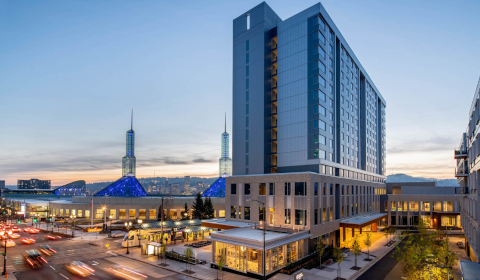 Book Your Hotel »
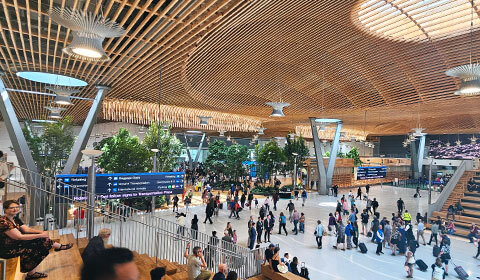 Negotiated Airfare
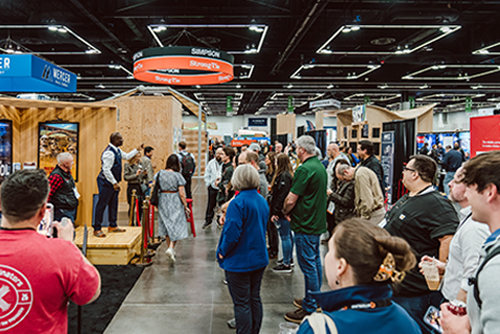 Reserve Your Booth »
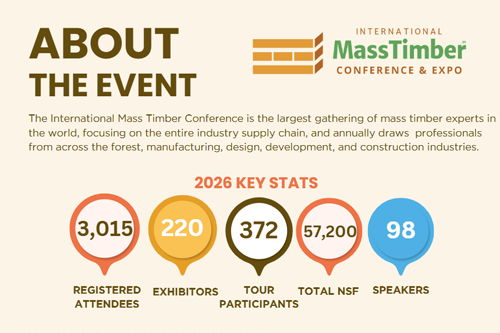 Sponsorship Download »


Wednesday, April 1, 2026
Mass Timber Advanced Topics: Performance, Detailing and Durability
Rooms C123–124Moderator:

Structural Design of Multi-Span Hybrid Timber-Concrete Composite (TCC) Floor Systems Subjected to Negative Bending Moment
This study presents the structural design and experimental validation of continuous multi-span Timber–Concrete Composite (TCC) floor systems subjected to negative bending moments. Full-scale testing conducted at Washington State University demonstrated reliable ductile behavior, efficient energy dissipation, and a notable increase in collapse margin, positioning TCC floors as a competitive alternative to reinforced concrete slabs in hybrid mass-timber buildings. The research develops and validates a rational design framework for multi-span TCC systems, addressing conditions where negative bending governs structural performance, such as at the supports and at connections to reinforced concrete core walls in high-rise applications, where lateral loads induce negative moments in the slabs.

Ronald McDonald House, Vancouver: Seismic Design and Experimental Testing of an All-Wood LFRS for a 12-Story Building
Ronald McDonald House’s 12-story Willow House in Vancouver utilizes CLT shear walls coupled with steel link beams as an LFRS. The steel link beams act as ductile fuses, dissipating energy in an earthquake, and post-tensioned rods in the lower stories enhance lateral stiffness.
A large-scale experimental program was conducted by StructureCraft with OSU and UNBC to investigate the behavior of critical and innovative components to inform performance assessment parameters and nonlinear model elements. The experiments included full-scale steel link beams with CLT wall piers, confined CLT shear wall compression toes, and high-strength CLT flange-to-web wall screwed joints.

The Art of Detailing Prestressed Mass Timber Structures
Drawing on two decades of research and full-scale testing—from New Zealand’s PRES-LAM breakthroughs to UC San Diego’s 10-story NHERI shake-table project—Dr. Palermo will trace the evolution of post-tensioned timber from academic concept to large-scale reality. He will highlight how thoughtful detailing, innovative connection design, and an understanding of wood’s natural behavior can deliver outstanding resilience, sustainability, and architectural elegance.

Redmond Public Library: Advanced Hybrid Design and the Art of Connection
The Redmond Public Library demonstrates cutting-edge hybrid design strategies that push the boundaries of mass timber construction. A key innovation is the queen post truss system, which pairs a glulam beam with a steel rod bottom chord to span 66 feet across the central library space. With steel tension loads exceeding 100 kips, the wood-steel interface demanded precise detailing and advanced modeling. The design team used 3D printing to prototype complex geometries, validate load paths, and resolve constructability challenges—bridging the gap between structural performance and architectural intent.

Mass Timber Floor Vibration: Trends and Insights From an Extensive Collection of Real-World Measurement Data
Field measurement data are crucial to expanding mass timber use in vibration-sensitive buildings, such as laboratories and healthcare facilities. This presentation summarizes one of the largest mass timber vibration measurement datasets to date, with over 60 locations across 11 buildings of various types, including office, residential, and laboratory facilities.

Session CEUs
Course Description
This session examines advanced design and construction topics that influence the performance of mass timber buildings, with an emphasis on connection detailing, fabrication considerations, and long-term behavior. Through research insights and built case study examples, presenters will address fire and seismic design implications for Type IV construction, deformation compatibility, and durability considerations related to moisture and fastener performance. Attendees will gain practical insights to support code-compliant design, improve constructability, and enhance the resilience and reliability of mass timber structures.
Learning Objectives
- Evaluate advanced structural systems for mass timber and hybrid buildings, including timber–concrete composite floors, post-tensioned timber, and integrated wood–steel–concrete assemblies.
- Incorporate field data and experimental insights to improve serviceability, occupant comfort, and long-term reliability of mass timber floor and structural systems.
- Assess connection detailing strategies that balance structural performance, constructability, and architectural intent in complex hybrid projects.
- Apply performance-based seismic design concepts to mass timber lateral force-resisting systems, including the role of ductile components and confinement detailing, ensuring structural safety and resiliency.