 The Boardroom
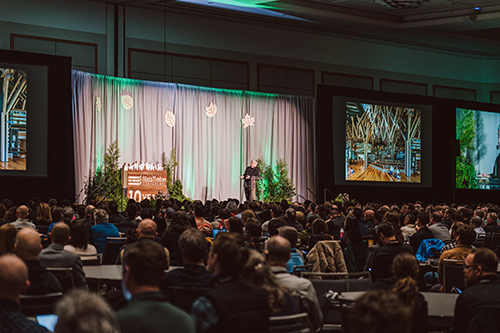 Keynote Presentations
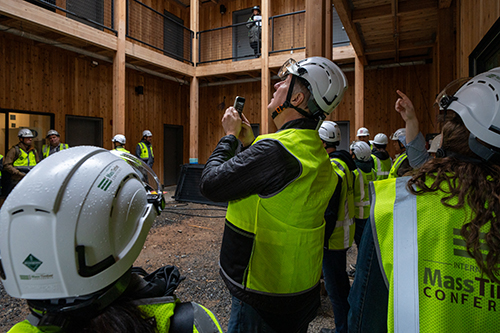 Building Tours
 Workshops
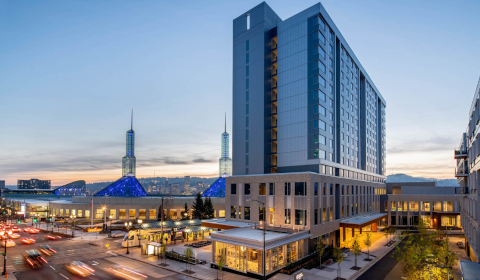 Book Your Hotel »
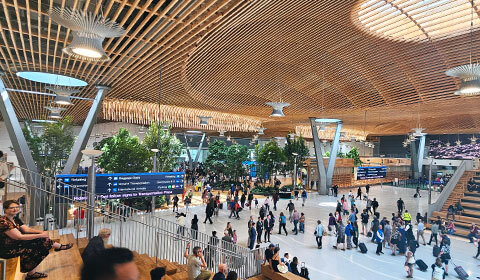 Negotiated Airfare
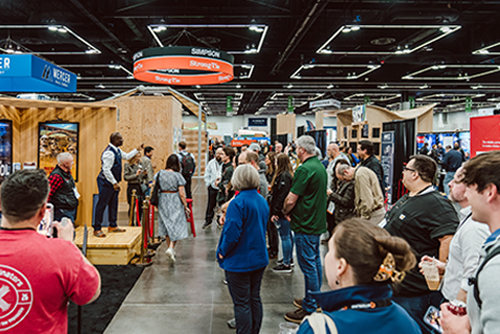 Reserve Your Booth »
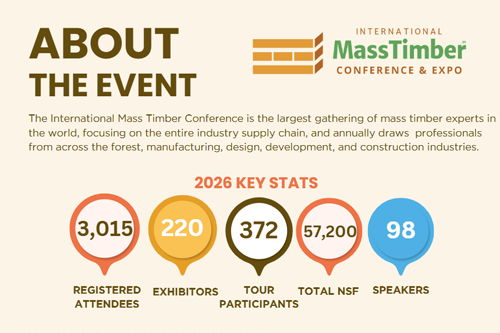 Sponsorship Download »


Wednesday, April 1, 2026
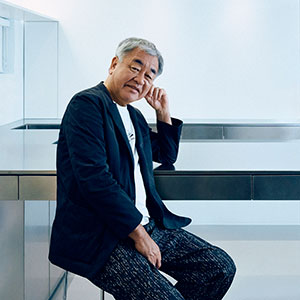
KEYNOTE | Buildings That Breathe: A Conversation With Kengo Kuma
Portland Ballrooms (Level 2, South Side)Renowned Japanese architect Kengo Kuma joins us at the International Mass Timber Conference for the first time. Kengo was named by Time Magazine in 2021 as the world’s most influential architect.
About the Presentation...
Spend opening morning with visionary architect Kengo Kuma, as we learn how to build better buildings that respect nature, culture, and the human experience.
Session CEUs
Course Description
This keynote presentation explores a regenerative approach to architecture through the eyes of world-renowned architect Kengo Kuma, whose work redefines how buildings can harmonize with their environment, culture, and occupants. Drawing on his extensive global portfolio and rooted in a deep respect for natural materials—particularly wood—this session will illuminate how design strategies that foreground context, sensory experience, and ecological responsiveness can elevate the practice of mass timber architecture. Participants will gain insight into the philosophical and practical drivers behind Kuma’s celebrated work, including the use of timber as both structural and expressive material, the integration of light and natural systems, and architecture’s capacity to “breathe” with place and people. Through these ideas, attendees will learn how to expand their design thinking to achieve architecture that is humane, sustainable, and contextually resonant.
Learning Objectives
- Explain the role of contextual sensitivity in architectural design, including how considerations of culture, site, and landscape inform material choices and spatial qualities in mass timber projects.
- Describe design strategies that enhance human experience and environmental performance, such as the use of natural light, tactile materials, and spatial permeability to create buildings that feel integrated with their surroundings.
- Articulate how timber can function as both a structural system and an expressive medium, drawing on global examples that demonstrate its versatility in contemporary architecture.
- Evaluate the relationship between traditional craft and modern innovation, understanding how blending these approaches can foster more sustainable, meaningful built environments.