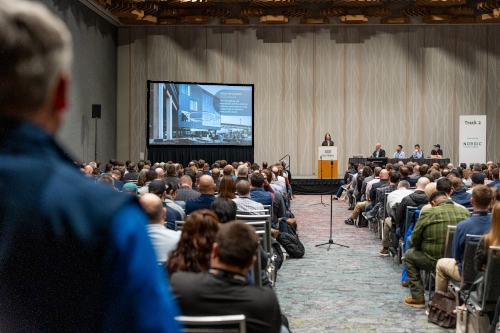
 View the Agenda
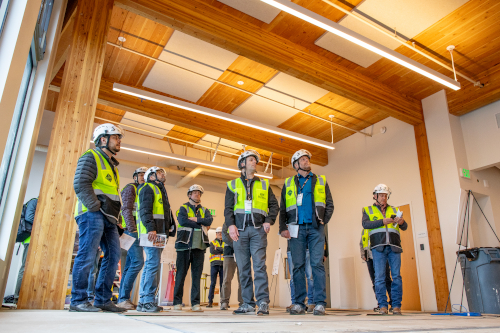 Book a Building Tour
 Book Your Exhibit Space
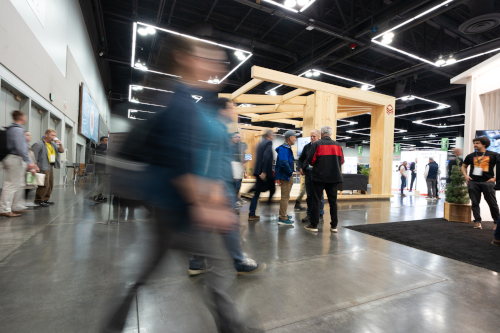 Explore the Exhibit Hall
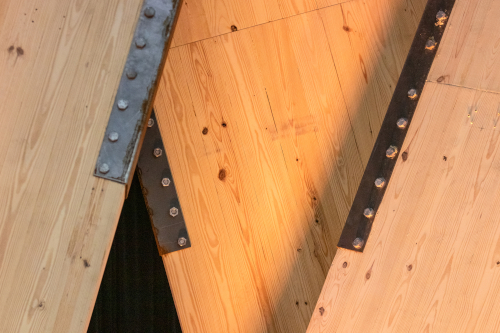 Become a Sponsor
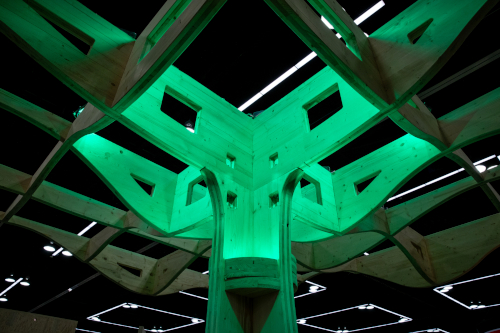 View Sponsors & Partners
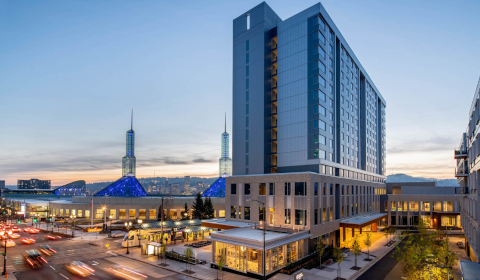 Reserve Hotel Rooms
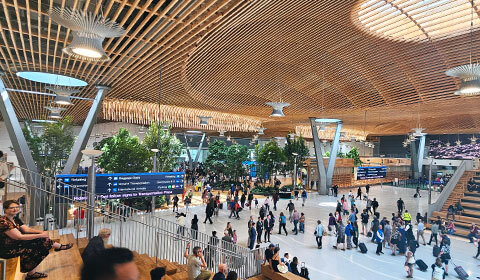 Discounted Plane Tickets
 Read Case Studies
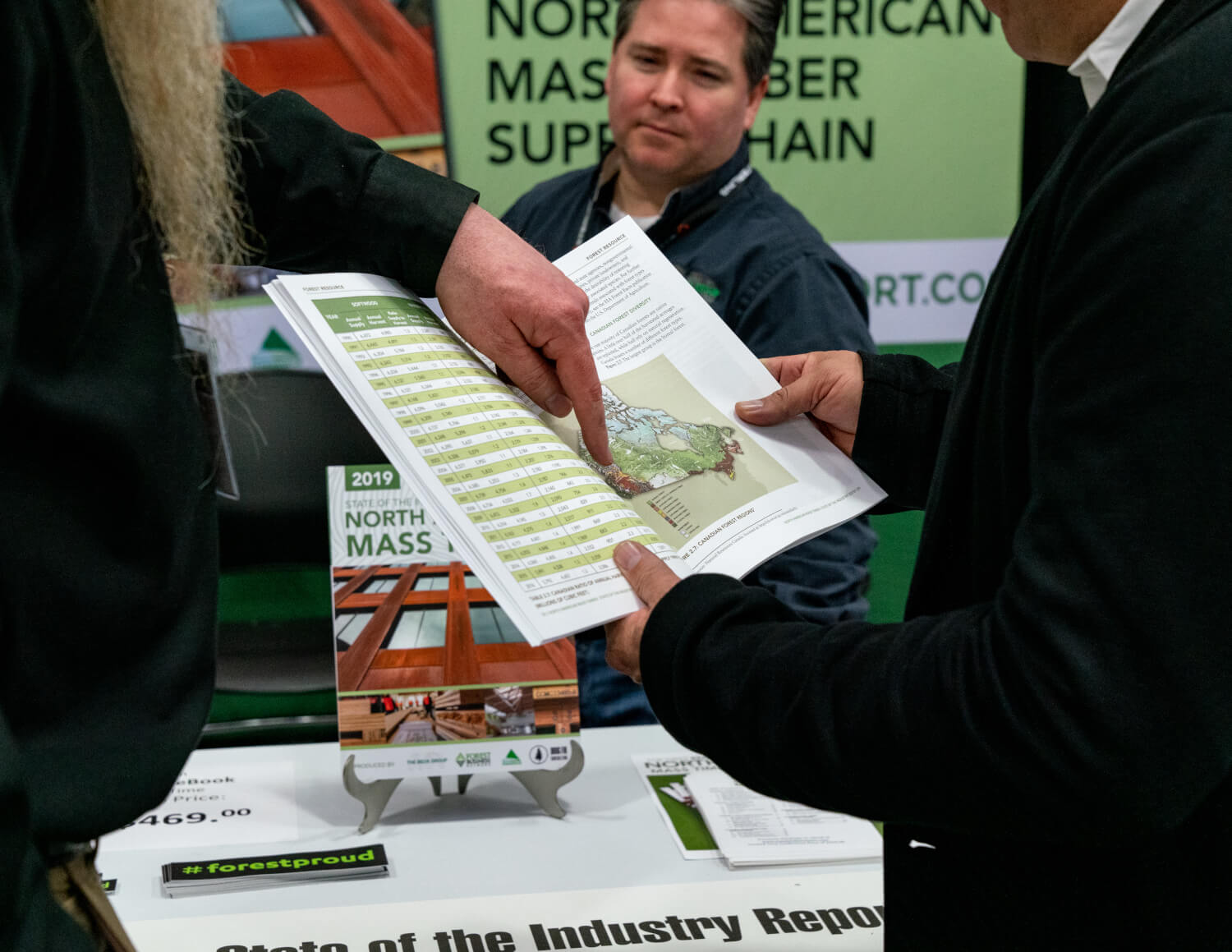 Download Past Reports

Wednesday, April 1, 2026
Mass Timber Advanced Topics: Engineering Applications
Rooms C123–124Fire Testing in the US: 10 Years of Success and Positive Influence (And What’s Next?)
Ten years ago, mass timber was not considered a fire-safe building material. Since 2015, a substantive number of fire tests have been completed that have changed the perception of mass timber and positively influenced how mass timber is accepted in the U.S. The impact of the completed fire testing is not well understood and has not been celebrated.
This presentation provides an overview of the fire testing completed since 2015, the importance and impact. Fire testing is extraordinarily difficult to pass, and yet many global firsts have occurred in the U.S. Examples will include DR Johnson’s exposed CLT floor test in 2016, CLT compartment tests at NIST and ATF, CLT adhesive qualifying tests, glulam beam to column connection achieving two hours, CLT exterior wall passing NFPA 285, and the recent three hours glulam column test. The fire testing has successfully supported rapid code change and, most importantly, changed the mindset of building and fire authorities.
And what’s next? The presentation will summarize some current gaps and where building design and construction can benefit from fire testing for efficient and competitive construction. The presentation will be image and video based and provide a good news story for the 10 year anniversary.

Igniting Progress in Mass Timber Fire Design: Lessons Learned From the Recent CLT Connection Testing
This presentation examines the fire performance of CLT connections, highlighting findings from two distinct studies on floor-to-wall and panel-to-panel configurations. The first study, conducted as part of the WOODWISE project, utilizes large-scale compartment fire tests to evaluate balloon-frame floor-to-wall connections under natural fire conditions. The second study investigates CLT panel-to-panel connections, specifically focusing on how dimensional tolerance gaps (ranging from 0 mm to 6 mm) and connection geometry—such as butt joints, half-laps, and splines—influence char propagation and airflow. Key insights from these papers provide insight into how connection detailing and design can provide mitigation fire-induced degradation in addition to prescriptive encapsulation thicknesses.

Performance-Based Fire Design of Concealed Mass Timber Connections: Lessons from Full-Scale Furnace Testing
Prescriptive fire design approaches for mass timber connections rely on conservative assumptions related to wood cover, char penetration, and joint detailing to protect concealed metal components. While effective for compliance, these assumptions can lead to oversized members, reduced constructability, and limited insight into the actual fire performance of the connection itself. This presentation summarizes a staged fire-testing program on concealed mass timber beam-to-column connections, culminating in a full-scale, fully loaded ASTM E119 furnace test achieving fire endurance exceeding two hours. The presentation emphasizes lessons learned regarding governing failure mechanisms, joint gap tolerance, underside charring, corner rounding, and fastener exposure. The discussion highlights how performance-based fire testing can inform more rational connection detailing today and help guide future test programs and the ongoing evolution of design standards.

Systems in Sync: Integrating Building Systems in Mass Timber Construction
This focused presentation explores the intricate coordination required to integrate HVAC, electrical, plumbing, and fire protection systems within mass timber construction. Drawing on lessons from recent higher education and civic projects, Kerry Phillips will discuss how early design collaboration and digital modeling can ensure that building systems complement—rather than compromise — the expressive and structural qualities of timber architecture.
Participants will gain insight into strategies for routing and sequencing systems within cross-laminated timber and glulam assemblies, managing penetrations, and maintaining fire ratings while preserving the material’s visual integrity. The session will also examine the importance of early subcontractor engagement, prefabrication planning, and trade sequencing to minimize field conflicts and rework.
By aligning system coordination with architectural intent, this session demonstrates how thoughtful integration can reduce cost and schedule risks, streamline construction, and maintain the craft and clarity that define mass timber design.

Smarter Timber Sealing in Public Schools and Libraries
You’ve gotta seal the wood, right? Sealing an entire building’s worth of timber can get pricey — a seemingly insurmountable cost when competing with conventional construction. And even if the project bites the bullet and does seal all the wood, how does mass timber hold up to long-term wear in highly trafficked environments like public schools and libraries? How do repairs compare to the work required to re-paint a gypsum wall? Join us to learn about our year-long experiment designed to test a new strategy in the economical sealing of timber and ways to address common vandalism, spills, cleaning repairs, and patching. We’ll explore the strategy, the experiment, key lessons learned, and valuable client feedback.

Session CEUs
Course Description
This advanced panel session brings together leading researchers and practitioners to examine life safety, constructability, and durability considerations in contemporary mass timber design. Through a series of focused presentations, the session addresses how recent research findings and project experience are informing safer, more efficient, and more resilient mass timber buildings.
Attendees will gain insight into results from large-scale fire testing of cross-laminated timber (CLT) assemblies and connections, including floor-to-wall, panel-to-panel, and steel-to-wood configurations. Discussion will highlight how connection detailing, geometry, dimensional tolerances, and wood cover thickness influence fire resistance, structural performance, and compliance with U.S. and international code provisions—directly impacting occupant safety and life safety outcome.
The session also explores best practices for integrating mechanical, electrical, plumbing, and fire protection systems within mass timber structures, emphasizing early design coordination, digital modeling, and trade sequencing to reduce risk while maintaining required fire ratings and architectural intent. In addition, presenters will examine design-stage strategies for protecting exposed timber in high-traffic public buildings, such as schools and libraries, with a focus on durability, repairability, and long-term performance.
Learning Objectives
- Analyze recent full-scale fire testing research on mass timber connections—including CLT floor-to-wall, panel-to-panel, and steel-to-wood assemblies—and assess its implications for fire resistance, life safety performance, and code-compliant design.
- Evaluate how connection detailing, geometry, dimensional tolerances, and wood cover thickness influence fire performance, constructability, and material efficiency in mass timber buildings.
- Identify best practices for integrating mechanical, electrical, plumbing, and fire protection systems during design development to maintain fire ratings, support occupant safety, and improve construction efficiency in mass timber structures.
- Apply lessons learned from research and case studies to inform design-stage strategies for protecting exposed timber surfaces in high-use public buildings, supporting durability, repairability, and long-term performance that contributes to public health, safety, and welfare.